lesson plan class 2 maths English Medium
Lesson plan class 2 maths PDF | NCERT | B.Ed | D.El.Ed | BSTC | Primary Teachers
📚 Lesson plan class 2 maths English Medium
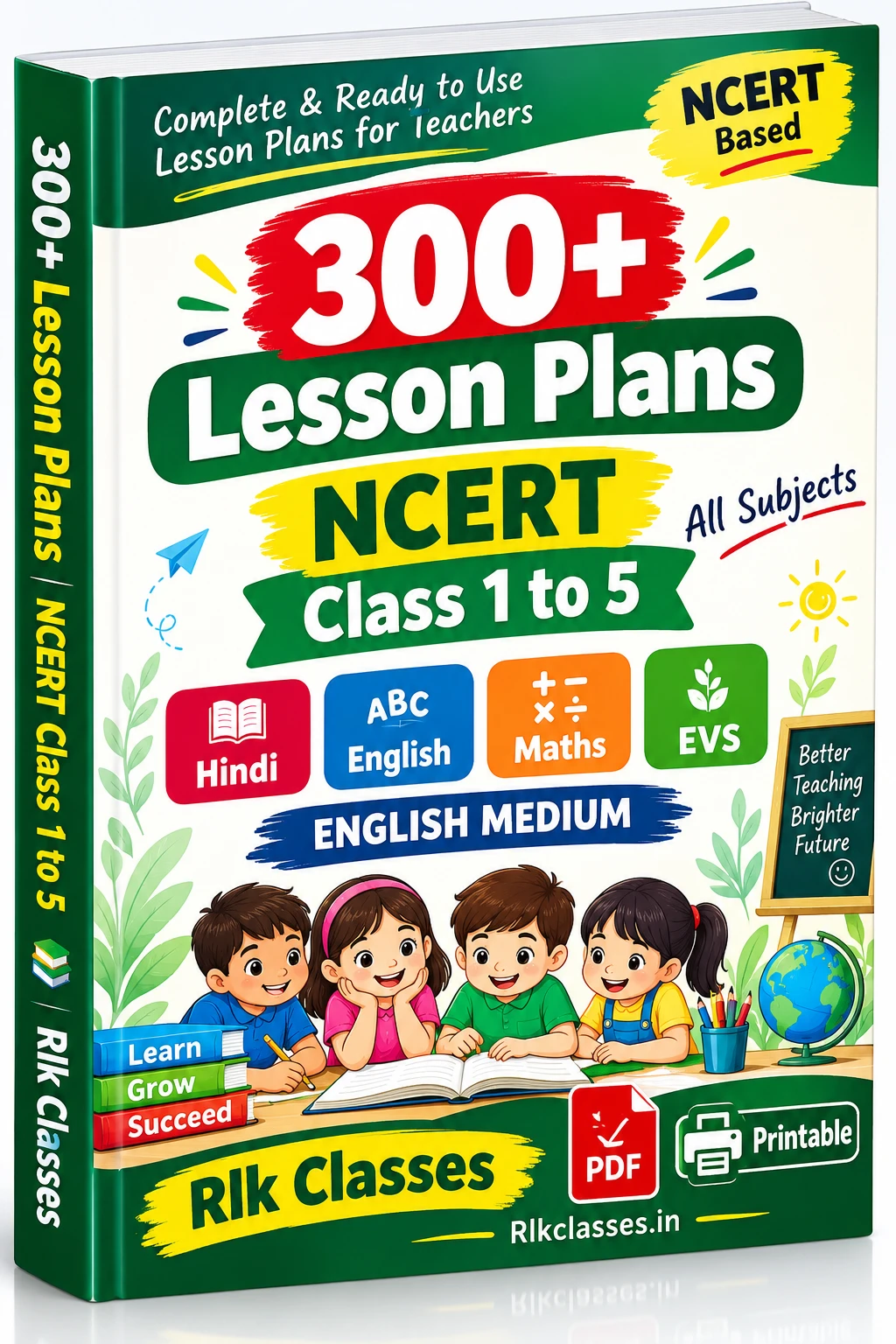
Lesson plan class 2 maths English Medium प्राथमिक कक्षा के विद्यार्थियों के लिए Mathematics को सरल, रोचक और activity-based तरीके से पढ़ाने में सहायता करता है। यह lesson plan B.Ed, D.El.Ed, BSTC तथा primary school teachers के लिए उपयोगी है।
Class 2 में बच्चों को numbers, addition, subtraction, multiplication, division, shapes, measurement, money, time और patterns जैसे महत्वपूर्ण mathematical concepts से परिचित कराया जाता है। इसलिए एक व्यवस्थित class 2 maths lesson plan teaching को अधिक प्रभावी बनाता है।
📌 Lesson plan class 2 maths – Quick Information
🎯 What is class 2 maths lesson plan?
A Maths Lesson Plan is a systematic teaching plan that helps the teacher decide what to teach, how to teach and how to evaluate students’ learning.
For Class 2 students, Mathematics should be taught through examples, classroom activities, objects, pictures, counting exercises and real-life situations. इससे बच्चों में mathematical thinking और problem-solving ability विकसित होती है।
📝 What is Included in Lesson plan class 2 maths?
- General Teaching Information
- Learning Objectives
- Learning Outcomes
- Previous Knowledge
- Teaching Learning Materials
- Introduction / Previous Knowledge Questions
- Detailed Teaching Presentation
- Teacher and Student Activities
- Blackboard Work
- Classroom Activities
- Evaluation Questions
- Homework / Practice Work
📊 Important Learning Areas for Class 2 Mathematics
| Learning Area | What Students Learn | Classroom Approach |
|---|---|---|
| Numbers | Counting, number recognition and number comparison | Number cards and counting activities |
| Addition | Adding numbers using simple situations | Objects, pictures and number lines |
| Subtraction | Taking away and finding the difference | Objects and real-life examples |
| Multiplication | Understanding repeated addition | Groups and equal quantities |
| Shapes | Identification of common shapes | Classroom objects and shape cards |
| Measurement | Length, weight and comparison | Real objects and measurement activities |
| Time & Money | Basic understanding of time and money | Clock and pretend shop activities |
📖 Class 2 Maths Lesson Plan – Complete Chapter Wise Content
NCERT JOYFUL MATHEMATICS
ENGLISH MEDIUM
SESSION 2026–27
ALL CHAPTERS CHAPTER-WISE LESSON PLANS
RLK CLASSES
This complete collection contains detailed Lesson plan class 2 maths based on the NCERT Joyful Mathematics textbook. The lesson plans are prepared in an activity-based and child-centred format so that the teacher can introduce mathematical concepts through real-life situations, concrete objects, observation, discussion, questioning, practice and classroom activities. The language has been kept suitable for English Medium teaching and the content is arranged in a format useful for teaching practice, school teaching, B.Ed., D.El.Ed. and BSTC lesson plan work.
Lesson plan class 2 maths CHAPTER INDEX
Lesson plan class 2 maths 1 – A Day at the Beach
Topic: Counting in Groups
Class: II | Subject: Mathematics
| General Objectives | The general objectives of teaching this lesson are:
|
||||||||||||||||||
| Specific Objectives | After completing the lesson, students will be able to:
|
||||||||||||||||||
| Teaching Aids | Shells, stones, bottle caps, beads, sticks, counters, picture cards, number cards, small bowls, worksheets and objects collected from the classroom. | ||||||||||||||||||
| Teaching Method | Activity Method, Demonstration Method, Question-Answer Method, Observation Method and Learning by Doing. | ||||||||||||||||||
| Previous Knowledge | Students can count numbers in sequence and can count familiar objects such as pencils, books, toys and classroom materials. They have also experienced situations in which similar objects are kept together. | ||||||||||||||||||
| Introduction |
|
||||||||||||||||||
| Statement of Objective | Today we are going to learn how objects can be arranged into equal groups and how grouping helps us count many objects easily and quickly. |
| Teaching Point | Pupil-Teacher Activity | Pupil Activity |
|---|---|---|
| 1. Counting Objects in Groups | The pupil-teacher places a collection of shells or counters before the students. First, the objects are counted one by one. The teacher then arranges the same objects into equal groups. The teacher explains that when the number of objects is large, grouping similar objects together can make counting easier. The teacher makes groups of two and asks the students to count the groups. The teacher asks: Developmental Questions: 1. If there are two groups and each group has 2 shells, how many shells are there altogether? Answer: 4 2. If there are three groups and each group has 2 shells, how many shells are there? Answer: 6 3. How many groups of two can be made from 8 objects? Answer: 4 The teacher encourages children to physically arrange the objects before giving the answer. |
Students count the objects individually and then arrange them into equal groups. They count each group carefully and find the total number of objects. Students answer the developmental questions orally and demonstrate their answers using counters or shells. |
| 2. Making Groups of 5 and 10 | The teacher gives children 20 counters and asks them to make groups of 5. The teacher explains that four groups of 5 make 20. The teacher then demonstrates grouping objects in tens. Children are encouraged to recognise that groups of 10 are useful when counting many objects. The teacher asks: Developmental Questions: 1. How many objects are there in one group of five? Answer: 5 2. How many groups of five make 15? Answer: 3 3. How many groups of ten make 20? Answer: 2 The teacher explains that equal groups must contain the same number of objects. |
Students take counters and make groups of five and ten. They count the groups and write the total number of objects. They compare the groups and understand that each equal group contains the same number of objects. |
| 3. Counting Quickly by Grouping | The teacher places 12 objects in front of the class and asks students to count them. After individual counting, the teacher makes four groups of three. The teacher explains that 3 + 3 + 3 + 3 gives the same total of 12. Students are encouraged to explain which method they find easier. The teacher asks: Developmental Questions: 1. How many objects are in four groups of three? Answer: 12 2. What is 3 + 3 + 3? Answer: 9 3. If there are five groups of two, how many objects are there? Answer: 10 The teacher concludes that grouping helps us count repeated equal quantities efficiently. |
Students arrange counters into equal groups and count them. They use repeated addition orally and explain their counting method. Students participate in the group activity and compare different ways of counting the same collection. |
BLACKBOARD WORK
Counting in Groups
2 + 2 + 2 = 6
5 + 5 + 5 = 15
10 + 10 = 20
4 groups of 3 = 12
Equal groups have the same number of objects.
- What is an equal group?
- How many objects are there in three groups of two?
- How many groups of five make ten?
- Write repeated addition for three groups of four.
- Why is grouping useful when we count many objects?
Draw 4 groups of 5 objects in your notebook. Count the total number of objects and write the repeated addition sentence.
Lesson plan class 2 maths 2 – Shapes Around Us
Topic: 3D Shapes
Class: II | Subject: Mathematics
| General Objectives |
|
||||||||||||||||||
| Specific Objectives | Students will be able to:
|
||||||||||||||||||
| Teaching Aids | Ball, dice, chalk box, book, pencil box, tin can, ice-cream cone, building blocks, shape cards and classroom objects. | ||||||||||||||||||
| Teaching Method | Demonstration Method, Observation Method, Activity Method, Question-Answer Method and Learning by Doing. | ||||||||||||||||||
| Previous Knowledge | Students have seen and handled common objects such as balls, boxes, books, cans and toys. | ||||||||||||||||||
| Introduction |
|
||||||||||||||||||
| Statement of Objective | Today we will learn about different three-dimensional shapes and identify these shapes in objects around us. |
| Teaching Point | Pupil-Teacher Activity | Pupil Activity |
|---|---|---|
| 1. Sphere | The teacher shows a ball and asks children to observe its surface. The teacher rolls the ball and discusses how it can move in different directions. The teacher asks: 1. Which object has a round surface? Answer: Ball 2. Can a ball roll? Answer: Yes 3. Name another object similar to a ball. Answer: Orange The teacher explains that a sphere is a solid shape with a curved surface. |
Students touch and observe the ball. They roll it and identify other spherical objects from their surroundings. |
| 2. Cube and Cuboid | The teacher shows a dice and a rectangular box. Students are asked to observe their faces and corners. The teacher asks: 1. What shape is a dice? Answer: Cube 2. What shape is a book or box usually like? Answer: Cuboid 3. Do these objects have flat faces? Answer: Yes The teacher allows children to hold the objects and examine them. |
Students handle the objects, count their visible faces and identify cube and cuboid shaped objects in the classroom. |
| 3. Cylinder and Cone | The teacher shows a tin can and an ice-cream cone. The teacher explains that a cylinder has curved and flat surfaces while a cone has a curved surface and a pointed top. The teacher asks: 1. Which shape is a tin can? Answer: Cylinder 2. Which shape has a pointed top? Answer: Cone 3. Name one object shaped like a cone. Answer: Ice-cream cone The teacher asks students to find similar objects in the classroom. |
Students observe the objects, identify their shapes and give examples from daily life. |
BLACKBOARD WORK
Sphere → Ball
Cube → Dice
Cuboid → Book / Box
Cylinder → Tin Can
Cone → Ice-cream Cone
- Name the shape of a ball.
- Which solid shape does a dice represent?
- Name one cuboid-shaped object.
- Name one cylindrical object.
- Which shape has a pointed top?
Find and draw one object each shaped like a sphere, cube, cuboid, cylinder and cone.
Lesson plan class 2 maths 3 – Fun with Numbers
Topic: Numbers 1 to 100
Class: II | Subject: Mathematics
| General Objectives |
|
||||||||||||||||||
| Specific Objectives | Students will be able to:
|
||||||||||||||||||
| Teaching Aids | Number cards, hundred chart, bundles of sticks, counters, place-value cards, board and worksheets. | ||||||||||||||||||
| Teaching Method | Activity Method, Demonstration Method, Question-Answer Method and Practice Method. | ||||||||||||||||||
| Previous Knowledge | Students can count numbers in sequence and recognise many numbers from daily life. | ||||||||||||||||||
| Introduction |
|
||||||||||||||||||
| Statement of Objective | Today we will learn to read, write, compare and arrange numbers from 1 to 100 and understand tens and ones. |
| Teaching Point | Pupil-Teacher Activity | Pupil Activity |
|---|---|---|
| 1. Reading and Writing Numbers | The teacher displays number cards from 1 to 100 and asks students to read them. The teacher then dictates selected numbers and asks children to write them. The teacher asks: 1. What comes after 39? 40 2. What comes before 50? 49 3. What comes between 67 and 69? 68 The teacher explains that numbers have a fixed order. |
Students read number cards, arrange them in order and write the numbers in their notebooks. |
| 2. Tens and Ones | The teacher makes bundles of ten sticks. For example, 34 is represented by three bundles of ten and four single sticks. The teacher explains that the bundles represent tens and the loose sticks represent ones. The teacher asks: 1. How many tens are there in 34? 3 2. How many ones are there in 34? 4 3. How many tens and ones are there in 52? 5 tens and 2 ones |
Students make bundles and identify tens and ones using sticks and counters. |
| 3. Comparing Numbers | The teacher writes pairs of numbers such as 35 and 53. Children compare them by observing the tens first and then the ones. The teacher asks: 1. Which is greater: 42 or 24? 42 2. Which is smaller: 61 or 16? 16 3. Arrange 25, 12 and 40 from smallest to greatest. 12, 25, 40 |
Students compare numbers using number cards and symbols such as greater than and less than where appropriate. |
BLACKBOARD WORK
34 = 3 Tens + 4 Ones
52 = 5 Tens + 2 Ones
42 > 24
16 < 61
12, 25, 40 → Smallest to Greatest
- What comes after 59?
- What comes before 80?
- Write 46 in tens and ones.
- Which is greater: 37 or 73?
- Arrange 18, 45 and 29 from smallest to greatest.
Write numbers from 1 to 100 and circle all the numbers having 5 in the ones place.
Lesson plan class 2 maths 4 – Shadow Story
Topic: 2D Shapes
Class: II | Subject: Mathematics
| General Objectives |
|
||||||||||||||||||
| Specific Objectives | Students will be able to:
|
||||||||||||||||||
| Teaching Aids | Shape cut-outs, picture cards, paper sheets, pencil, ruler, objects from the classroom and torch for a simple shadow activity. | ||||||||||||||||||
| Teaching Method | Activity Method, Demonstration Method, Observation Method and Question-Answer Method. | ||||||||||||||||||
| Previous Knowledge | Students have seen circles, squares, triangles and rectangles in books, toys, classroom objects and surroundings. | ||||||||||||||||||
| Introduction |
|
||||||||||||||||||
| Statement of Objective | Today we will learn about two-dimensional shapes and identify their sides, corners and outlines. |
| Teaching Point | Pupil-Teacher Activity | Pupil Activity |
|---|---|---|
| 1. Circle | The teacher shows a circular cut-out and several circular objects. The teacher traces the boundary and asks children to observe that a circle has a curved boundary. Questions: 1. Is a coin circular? Yes 2. Does a circle have straight sides? No 3. Name one circular object. Students give examples. |
Students identify circular objects and draw circles using suitable objects or freehand drawing. |
| 2. Triangle and Square | The teacher displays triangle and square cut-outs. The teacher counts their sides and corners with children. Questions: 1. How many sides does a triangle have? 3 2. How many corners does a triangle have? 3 3. How many sides does a square have? 4 |
Students touch, trace and count sides and corners. They draw triangles and squares in their notebooks. |
| 3. Rectangle and Shape Identification | The teacher shows a book, door, board and other rectangular objects. Children are asked to identify the rectangular shape. The teacher asks children to look at a mixed collection of shapes and classify them into groups. | Students identify rectangular objects and sort shape cards into correct groups. |
BLACKBOARD WORK
Circle → Curved boundary
Triangle → 3 sides and 3 corners
Square → 4 sides and 4 corners
Rectangle → 4 sides and 4 corners
- Name a shape having three sides.
- How many sides does a square have?
- Name one circular object.
- How many corners does a rectangle have?
- Draw a triangle and a rectangle.
Find five objects at home and write the shape of each object.
Lesson plan class 2 maths 5 – Playing with Lines
Topic: Orientations of a Line
Class: II | Subject: Mathematics
| General Objectives |
|
||||||||||||||||||
| Specific Objectives | Students will be able to:
|
||||||||||||||||||
| Teaching Aids | Ruler, sticks, pencils, ice-cream sticks, line cards, pictures, blackboard and classroom objects. | ||||||||||||||||||
| Teaching Method | Demonstration Method, Activity Method, Observation Method and Question-Answer Method. | ||||||||||||||||||
| Previous Knowledge | Students have experience of drawing simple lines and observing lines on books, tables, doors and other objects. | ||||||||||||||||||
| Introduction |
|
||||||||||||||||||
| Statement of Objective | Today we will learn to identify and draw straight lines in different directions and observe lines around us. |
| Teaching Point | Pupil-Teacher Activity | Pupil Activity |
|---|---|---|
| 1. Vertical Line | The teacher draws a vertical line on the board and asks children to observe its direction. The teacher compares it with a standing object such as a door or pole. Questions: 1. Is this a standing line? Yes. 2. In which direction does it go? Up and down. 3. Can you find one vertical line in the classroom? Students identify examples. |
Students draw vertical lines and identify vertical lines in classroom objects. |
| 2. Horizontal Line | The teacher draws a horizontal line and compares it with the edge of a table or blackboard. Questions: 1. Is this a sleeping line? Yes. 2. Does it go up and down? No. 3. Where can we find a horizontal line? Table edge, board edge, etc. |
Students draw horizontal lines and identify them in their surroundings. |
| 3. Slanting Line | The teacher draws lines leaning in different directions. Children are asked to compare them with the sides of a ladder or sloping objects. The teacher explains that these are slanting lines because they are neither standing nor sleeping. | Students draw slanting lines in both directions and identify slanting lines in pictures. |
BLACKBOARD WORK
Vertical Line → |
Horizontal Line → __________
Slanting Lines → / \
Lines can have different directions.
- What is a vertical line?
- What is a horizontal line?
- Can a straight line be slanting?
- Draw one vertical and one horizontal line.
- Draw two slanting lines.
Observe your home and draw three objects containing different types of lines.
Lesson plan class 2 maths 6 – Decoration for Festival
Topic: Addition and Subtraction
Class: II | Subject: Mathematics
| General Objectives |
|
||||||||||||||||||
| Specific Objectives | Students will be able to:
|
||||||||||||||||||
| Teaching Aids | Counters, flowers, beads, picture cards, number cards, festival decoration pictures, worksheets and board. | ||||||||||||||||||
| Teaching Method | Activity Method, Demonstration Method, Question-Answer Method, Problem-Solving Method and Learning by Doing. | ||||||||||||||||||
| Previous Knowledge | Students know counting and can compare quantities. They have experienced situations where objects are added or removed. | ||||||||||||||||||
| Introduction |
|
||||||||||||||||||
| Statement of Objective | Today we will learn addition and subtraction through simple situations related to decoration and daily life. |
| Teaching Point | Pupil-Teacher Activity | Pupil Activity |
|---|---|---|
| 1. Addition by Combining | The teacher places 5 flowers on one side and 3 flowers on the other. Students are asked to combine both groups. The teacher explains that when two groups are put together, we use addition. Questions: 5 + 3 = ? 8 4 + 2 = ? 6 6 + 3 = ? 9 |
Students combine groups of objects, count the total and write the corresponding addition statements. |
| 2. Subtraction by Taking Away | The teacher places 10 decorative items and removes 4. Children count the remaining objects. The teacher explains that subtraction tells us how many remain after some objects are taken away. Questions: 10 – 4 = ? 6 8 – 3 = ? 5 9 – 2 = ? 7 |
Students remove counters physically and count the remaining objects. They write subtraction statements. |
| 3. Daily-Life Word Problems | The teacher gives a festival decoration situation: “Riya has 6 balloons. Her mother gives her 4 more balloons. How many balloons does she have now?” The teacher asks students to decide whether the situation needs addition or subtraction. Another situation is discussed: “There are 12 flowers. 5 flowers are used for decoration. How many flowers are left?” | Students identify the operation, use counters or drawings and solve the problems. |
BLACKBOARD WORK
5 + 3 = 8
4 + 2 = 6
10 – 4 = 6
8 – 3 = 5
Addition → Put together
Subtraction → Take away
- Solve: 5 + 4.
- Solve: 9 – 3.
- Which operation means putting together?
- Which operation means taking away?
- There are 7 balloons and 3 more are added. How many balloons are there?
Solve five addition and five subtraction questions in your notebook.
Lesson plan class 2 maths 7 – Rani’s Gift
Topic: Measurement
Class: II | Subject: Mathematics
| General Objectives |
|
||||||||||||||||||
| Specific Objectives | Students will be able to:
|
||||||||||||||||||
| Teaching Aids | Ruler, pencils, books, ribbons, sticks, paper strips, classroom bags, toy objects and simple balance. | ||||||||||||||||||
| Teaching Method | Activity Method, Demonstration Method, Observation Method and Question-Answer Method. | ||||||||||||||||||
| Previous Knowledge | Students can visually compare objects and use words such as big, small, long and short in everyday situations. | ||||||||||||||||||
| Introduction |
|
||||||||||||||||||
| Statement of Objective | Today we will learn to compare and measure different objects using length, height and weight. |
| Teaching Point | Pupil-Teacher Activity | Pupil Activity |
|---|---|---|
| 1. Longer and Shorter | The teacher places two ribbons side by side with the same starting point. Students observe which ribbon reaches farther. The teacher explains that the ribbon that has greater length is longer and the other is shorter. Questions: 1. Which ribbon is longer? Students observe and answer. 2. Can we compare pencils in the same way? Yes. 3. What should we do to compare fairly? Keep them from the same starting point. |
Students compare ribbons, pencils and sticks and use longer and shorter correctly. |
| 2. Taller and Shorter | The teacher compares two objects placed on the same surface and discusses their height. The teacher asks children to identify taller and shorter objects in the classroom, such as chairs, bottles and books. | Students compare heights and use the words taller and shorter in their answers. |
| 3. Heavier and Lighter | The teacher gives two objects to children and asks them to hold them. A simple balance is also demonstrated. The teacher explains that the object that weighs more is heavier and the one that weighs less is lighter. Questions: Which is likely to be heavier: a school bag full of books or an empty school bag? Full school bag. |
Students hold and compare objects and observe the balance to identify heavier and lighter objects. |
BLACKBOARD WORK
Longer ↔ Shorter
Taller ↔ Shorter
Heavier ↔ Lighter
We compare objects to understand measurement.
- What is the opposite of longer?
- What is the opposite of taller?
- What is the opposite of heavier?
- Name one object that can be measured with a ruler.
- Compare your pencil and notebook using longer and shorter.
Find three pairs of objects at home and write which object is longer, shorter, heavier or lighter.
Lesson plan class 2 maths 8 – Grouping and Sharing
Topic: Multiplication and Division
Class: II | Subject: Mathematics
| General Objectives |
|
||||||||||||||||||
| Specific Objectives | Students will be able to:
|
||||||||||||||||||
| Teaching Aids | Counters, beads, buttons, plates, toy fruits, number cards and worksheets. | ||||||||||||||||||
| Teaching Method | Activity Method, Demonstration Method, Role Play, Question-Answer Method and Problem-Solving Method. | ||||||||||||||||||
| Previous Knowledge | Students understand counting and can make equal groups of small numbers of objects. | ||||||||||||||||||
| Introduction |
|
||||||||||||||||||
| Statement of Objective | Today we will learn multiplication through equal groups and division through equal sharing. |
| Teaching Point | Pupil-Teacher Activity | Pupil Activity |
|---|---|---|
| 1. Equal Groups | The teacher gives 12 counters and asks children to make groups of 3. The teacher guides them to make four equal groups. The teacher asks: 1. How many groups did you make? 4 2. How many objects are in each group? 3 3. How many objects are there altogether? 12 |
Students arrange counters into four equal groups of three and count the total. |
| 2. Multiplication as Repeated Addition | The teacher explains that four groups of three can be written as: 3 + 3 + 3 + 3 = 12. The teacher introduces multiplication as a short way of describing equal groups. Questions: 2 + 2 + 2 = ? 6 3 groups of 4 = ? 12 5 groups of 2 = ? 10 |
Students make equal groups and write repeated addition sentences. They orally practise simple multiplication situations. |
| 3. Equal Sharing | The teacher places 12 counters and four plates. The teacher asks children to share the counters equally among the four plates. The teacher explains that division involves sharing or making equal groups. Questions: 12 objects shared among 4 children gives how many to each? 3 8 objects shared among 2 children gives how many to each? 4 |
Students distribute counters equally and count how many each child gets. They explain why equal sharing means everyone receives the same number. |
BLACKBOARD WORK
3 + 3 + 3 + 3 = 12
4 groups of 3 = 12
12 shared among 4 = 3 each
8 shared among 2 = 4 each
- How many objects are there in 3 groups of 2?
- Write repeated addition for 4 groups of 3.
- How many groups of 2 make 8?
- Share 10 objects equally among 5 children.
- Why should equal sharing give the same number to everyone?
Draw 3 equal groups of 4 objects and write the repeated addition sentence.
Lesson plan class 2 maths 9 – Which Season is it?
Topic: Measurement of Time
Class: II | Subject: Mathematics
| General Objectives |
|
||||||||||||||||||
| Specific Objectives | Students will be able to:
|
||||||||||||||||||
| Teaching Aids | Clock model, calendar, day cards, month cards, pictures of daily activities and seasonal pictures. | ||||||||||||||||||
| Teaching Method | Discussion Method, Demonstration Method, Activity Method and Question-Answer Method. | ||||||||||||||||||
| Previous Knowledge | Students are familiar with morning, afternoon, evening and night through their daily routines. | ||||||||||||||||||
| Introduction |
|
||||||||||||||||||
| Statement of Objective | Today we will learn about different parts of the day, days of the week, months, dates and the sequence of daily events. |
| Teaching Point | Pupil-Teacher Activity | Pupil Activity |
|---|---|---|
| 1. Parts of the Day | The teacher displays pictures of waking up, eating lunch, playing and sleeping. Students arrange them according to the time of day. The teacher explains morning, afternoon, evening and night. Questions: When do we have breakfast? Usually in the morning. When do we sleep? At night. |
Students arrange picture cards and describe their daily activities using time words. |
| 2. Days and Months | The teacher displays a calendar and asks children to find the current month and date. The teacher discusses the seven days of the week and explains that a calendar helps us organise days and dates. | Students identify today’s date, name the day and locate the month on the calendar. |
| 3. Seasons and Time Sequence | The teacher shows pictures representing different seasons and discusses weather conditions. The teacher then asks children to arrange events from morning to night. Students are encouraged to explain why one event comes before another. | Students identify seasonal pictures and arrange daily events in the correct sequence. |
BLACKBOARD WORK
Morning → Afternoon → Evening → Night
1 Week = 7 Days
Calendar → Days, Dates and Months
Time helps us arrange events in order.
- How many days are there in a week?
- Name the time when we usually sleep.
- What is used to see dates?
- Name any two days of the week.
- Arrange morning, evening and night in the correct order.
Draw a simple daily timetable showing what you do in the morning, afternoon, evening and night.
Lesson plan class 2 maths 10 – Fun at the Fair
Topic: Money
Class: II | Subject: Mathematics
| General Objectives |
|
||||||||||||||||||
| Specific Objectives | Students will be able to:
|
||||||||||||||||||
| Teaching Aids | Play coins, play notes, toy fruits, price cards, classroom shop, number cards and worksheets. | ||||||||||||||||||
| Teaching Method | Role Play, Activity Method, Demonstration Method, Question-Answer Method and Problem-Solving Method. | ||||||||||||||||||
| Previous Knowledge | Students have seen money being used at home, shops and markets. | ||||||||||||||||||
| Introduction |
|
||||||||||||||||||
| Statement of Objective | Today we will learn how money is used for buying things and how we can compare and calculate simple amounts. |
| Teaching Point | Pupil-Teacher Activity | Pupil Activity |
|---|---|---|
| 1. Coins and Notes | The teacher displays play money and asks children to identify different coins and notes. The teacher explains that different denominations have different values. Students are encouraged to arrange money from smaller to larger values. | Students identify coins and notes and arrange them according to value. |
| 2. Reading Prices | The teacher creates a small classroom shop. Different objects are given price labels. For example: Pencil – ₹5 Eraser – ₹3 Ball – ₹10 Notebook – ₹15 The teacher asks: Which object costs more? Which costs less? What is the total cost of a pencil and eraser? |
Students read the price labels, compare prices and calculate simple totals using play money. |
| 3. Spending and Remaining Money | The teacher gives a situation: “A child has ₹20 and buys a toy for ₹8. How much money is left?” The teacher allows students to use play money and physically remove ₹8 from ₹20. The teacher explains that subtraction can be used when finding the remaining amount. | Students use play money, subtract the amount spent and identify the remaining money. |
BLACKBOARD WORK
Money is used for buying things.
₹5 + ₹3 = ₹8
₹20 – ₹8 = ₹12
Price tells us how much an item costs.
- What do we use to buy things?
- Name one Indian coin.
- Which is greater: ₹8 or ₹15?
- If you have ₹10 and spend ₹4, how much remains?
- A pencil costs ₹5 and an eraser costs ₹3. What is the total?
Make a small list of five objects available at home or in a shop and write a suitable price for each.
Lesson plan class 2 maths 11 – Data Handling
Topic: Collecting, Organising and Reading Data
Class: II | Subject: Mathematics
| General Objectives |
|
||||||||||||||||||
| Specific Objectives | Students will be able to:
|
||||||||||||||||||
| Teaching Aids | Picture cards, fruits or toy objects, chart paper, tally marks, worksheet, board and coloured pencils. | ||||||||||||||||||
| Teaching Method | Activity Method, Survey Method, Observation Method, Discussion Method and Question-Answer Method. | ||||||||||||||||||
| Previous Knowledge | Students can count objects, compare groups and recognise which group has more or fewer objects. | ||||||||||||||||||
| Introduction |
|
||||||||||||||||||
| Statement of Objective | Today we will learn how to collect simple information, organise it into groups and read the information to answer questions. |
| Teaching Point | Pupil-Teacher Activity | Pupil Activity |
|---|---|---|
| 1. Collecting Information | The teacher asks a simple question: “Which fruit do you like most—Apple, Banana or Mango?” Each child gives one answer. The teacher records the answers on the board. The teacher explains that the information collected from the children is called data. | Students give their responses and observe how the teacher records the information. |
| 2. Organising and Counting Data | The teacher groups similar answers together. Example: Apple – 4 children Banana – 3 children Mango – 5 children The teacher explains that grouping and counting makes the information easier to understand. Questions: Which fruit has the highest number of votes? Mango. Which fruit has the lowest number of votes? Banana. |
Students count the responses and identify the groups with the most and least responses. |
| 3. Reading Data and Answering Questions | The teacher presents the collected data in a simple table or picture chart and asks questions based on it. The teacher asks: How many children like apples? Which fruit is liked by the most children? How many more children like mango than banana? The teacher encourages students to look at the data before answering. |
Students read the table, compare quantities and answer questions using the information provided. |
BLACKBOARD WORK
Favourite Fruits
Apple → 4
Banana → 3
Mango → 5
Most → Mango
Least → Banana
- What is data?
- Why do we group similar information?
- Which group has the most objects in a data table?
- Which group has the least objects?
- Can we answer questions by reading collected data?
Ask five family members about their favourite fruit. Record the answers in a simple table and find which fruit is liked by the most people.
Lesson plan class 2 maths Complete Revision
NCERT Joyful Mathematics | English Medium | Session 2026–27
| Revision Objective | The purpose of the revision is to help students recall the mathematical concepts taught throughout the year and use them in familiar situations. The teacher should give children opportunities to explain their thinking rather than asking them only to memorise answers. |
| Revision Topics |
|
| Revision Activity | The teacher can arrange different activity stations in the classroom. At one station students count objects in equal groups. At another station they identify shapes. At another station they solve addition and subtraction problems. Students can also measure objects, use play money, arrange daily events according to time and read a simple data table. The purpose of the activity is to make revision interactive and to provide children with opportunities to use mathematics in practical situations. |
| Teacher’s Role | The teacher should observe individual differences among learners and provide additional concrete material to children who need support. Children who understand the concepts quickly may be given slightly challenging situations. The teacher should encourage every child to explain how an answer was obtained. |
| Evaluation | Evaluation should be based on oral questioning, notebook work, classroom activities, worksheets, observation, participation and simple problem-solving situations. |
| Homework | Revise all the chapters and practise the examples and activities discussed in the classroom. Students should also observe mathematical ideas such as counting, shapes, measurement, money and time in their daily surroundings. |
👨🏫 How to Teach Lesson plan class 2 maths?
Class 2 Mathematics को केवल textbook पढ़ाकर नहीं बल्कि बच्चों को देखने, गिनने, छूने, बोलने और करके सीखने के अवसर देकर पढ़ाना अधिक प्रभावी होता है।
- Lesson की शुरुआत previous knowledge से करें।
- बच्चों से छोटे और सरल questions पूछें।
- Real-life examples का प्रयोग करें।
- Objects और picture cards का उपयोग करें।
- Students को activity में actively participate करवाएँ।
- अंत में short evaluation questions पूछें।
🎲 Class 2 Maths Activity Ideas
विद्यार्थियों को अलग-अलग number cards देकर ascending और descending order में लगाने के लिए कहें।
बच्चों को pencils, blocks या अन्य classroom objects देकर addition को practically समझाएँ।
Classroom में circle, square, rectangle और triangle जैसी shapes खोजने के लिए बच्चों को प्रेरित करें।
Classroom में छोटा pretend shop बनाकर बच्चों को money और simple addition-subtraction समझाएँ।
🎓 B.Ed Students के लिए Lesson plan class 2 maths
B.Ed students के teaching practice और internship के दौरान एक structured Mathematics lesson plan उपयोगी होता है। इसमें teaching objectives, classroom interaction, teaching-learning materials, presentation, blackboard work और evaluation को व्यवस्थित रूप से शामिल किया जा सकता है।
📘 D.El.Ed & BSTC Students के लिए
D.El.Ed और BSTC students के लिए Class 2 Maths Lesson Plan teaching practice, practical file और classroom demonstration में उपयोगी हो सकता है। Activity-based teaching के माध्यम से बच्चों को Mathematics concepts आसानी से समझाए जा सकते हैं।
✅ Benefits of Class 2 Maths Lesson Plan
🔗 More Lesson Plan Resources
नीचे RLK Classes पर उपलब्ध अन्य useful lesson plan resources के links दिए गए हैं। आप अपनी आवश्यकता के अनुसार संबंधित subject का lesson plan देख सकते हैं।
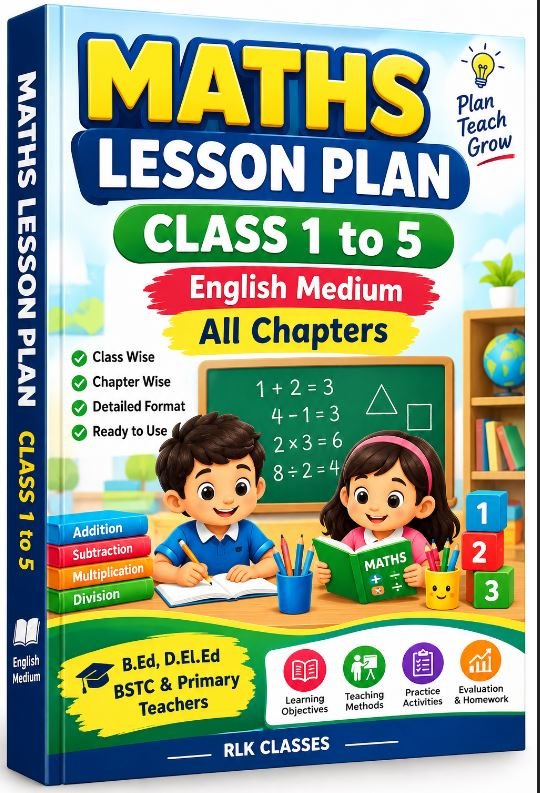
📚 Class 1 to 5 Maths Lesson Plan
यदि आप Class 1, Class 2, Class 3, Class 4 और Class 5 Maths Lesson Plan English Medium एक ही जगह देखना चाहते हैं, तो नीचे दिए गए मुख्य resource पर जाएँ।
❓ Frequently Asked Questions
यह B.Ed, D.El.Ed, BSTC students और primary school teachers के लिए उपयोगी है।
हाँ, यह post Class 2 English Medium Mathematics teaching को ध्यान में रखकर तैयार की गई है।
Numbers, addition, subtraction, multiplication, shapes, measurement, money, time और patterns जैसे topics शामिल हो सकते हैं।
हाँ। Class 1 to 5 Maths Lesson Plan के लिए ऊपर दिए गए मुख्य button पर click करें।
📥 Lesson plan class 2 maths खोज रहे हैं?
Class 2 Mathematics के साथ-साथ Class 1 to 5 के अन्य Maths Lesson Plans और EVS, English तथा Hindi Lesson Plans भी देखें।
📌 Conclusion
Maths Lesson Plan Class 2 English Medium teachers और teacher-training students के लिए Mathematics teaching को व्यवस्थित बनाने में मदद करता है। Activity-based और child-centred approach के माध्यम से Class 2 के विद्यार्थियों में number sense, logical thinking और problem-solving skills को विकसित किया जा सकता है।
Class 2 के साथ Class 1 to 5 Maths Lesson Plan तथा EVS, English और Hindi Lesson Plans के लिए ऊपर दिए गए resources का उपयोग करें।