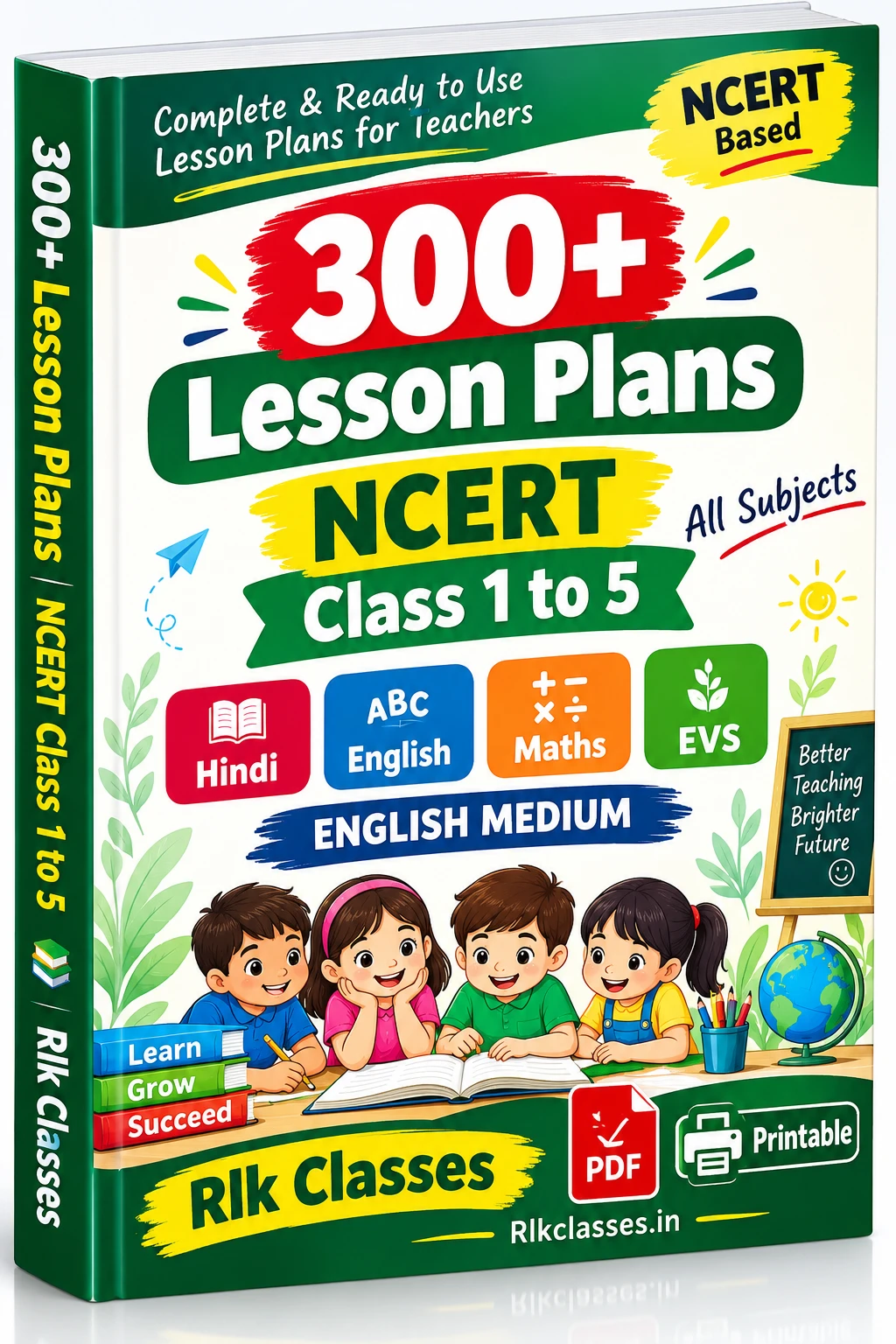
Lesson plan for class 1 Maths pdf English Medium
Complete Lesson plan for class 1 maths pdf for B.Ed, D.El.Ed, BSTC & Primary Teachers
CLASS 1 to 5 MATHS LESSON PLAN PDFClass 1 में Mathematics बच्चों की basic mathematical thinking विकसित करने का महत्वपूर्ण स्तर है। इस स्तर पर बच्चों को numbers, counting, shapes, comparison, patterns, position और everyday situations के माध्यम से Mathematics समझाना अधिक प्रभावी होता है।
यह Lesson plan for class 1 maths pdf English Medium B.Ed, D.El.Ed, BSTC students, trainee teachers और Primary Teachers के लिए teaching practice तथा classroom preparation में उपयोगी हो सकता है।
📚 Lesson plan for class 1 Maths pdf – Quick Information
Mathematics
Class 1 / Primary Level
English Medium
B.Ed, D.El.Ed, BSTC & Teachers
📖 What is Lesson plan for class 1 maths pdf?
Lesson plan for class 1 maths pdf एक व्यवस्थित teaching framework है जिसके माध्यम से teacher Mathematics के किसी topic को classroom में step-by-step पढ़ाने की योजना बनाता है।
इसमें lesson के learning objectives, previous knowledge, introduction, teaching-learning activities, teacher activity, student activity, blackboard work, evaluation और homework जैसी आवश्यक teaching components शामिल किए जाते हैं।
📋 Lesson plan for class 1 Maths pdf में क्या-क्या शामिल है?
Lesson के अंत तक students क्या सीखेंगे, यह स्पष्ट किया जाता है।
बच्चों को पहले से क्या जानकारी है, इसे identify किया जाता है।
Questions और daily-life examples के माध्यम से lesson शुरू किया जाता है।
Teacher द्वारा demonstration और classroom interaction।
Students observation, discussion और practical activities में भाग लेते हैं।
Students की learning को questions और activities के माध्यम से check किया जाता है।
🔢 Class 1 Mathematics में Important Learning Areas
Primary level Mathematics को बच्चों के आसपास की दुनिया से जोड़कर पढ़ाना अधिक meaningful बनाया जा सकता है। Class 1 में निम्न प्रकार के learning areas पर Lesson plan for class 1 maths pdf तैयार किए जा सकते हैं:
| Learning Area | What Students Learn |
|---|---|
| Numbers | Numbers को पहचानना, पढ़ना और लिखना। |
| Counting | Objects और collections को count करना। |
| Comparison | More, less और equal जैसी concepts को समझना। |
| Shapes | अपने आसपास दिखाई देने वाली basic shapes को पहचानना। |
| Patterns | Simple patterns को पहचानना और आगे बढ़ाना। |
| Position | Above, below, inside, outside जैसे positional concepts। |
| Measurement | Objects की length, size और अन्य attributes की तुलना। |
📘 Lesson plan for class 1 Maths pdf – Complete Lesson
नीचे दिया गया lesson plan classroom teaching और teaching practice के लिए तैयार किया गया है। इसमें lesson के objectives से लेकर presentation, classroom activities, blackboard work, evaluation और homework तक आवश्यक components शामिल हैं।
Class 1 NCERT Mathematics Lesson Plans
Chapter-wise Index
| School Name | ________________________ | Subject | Mathematics |
| Class | 1 | Duration | 40-45 Minutes |
| Topic – Finding the Furry Cat! – Counting and Locating Objects | |||
| 1. General Objectives |
|
||||||||||||||||
| 2. Specific Objectives |
|
||||||||||||||||
| 3. Teaching Aids | Toy cat, cat picture, number cards, classroom objects, box and chair. | ||||||||||||||||
| 4. Teaching Method | Activity Method, Demonstration Method and Question-Answer Method. | ||||||||||||||||
| 5. Previous Knowledge | Children can recognise familiar objects and can orally count a few objects. | ||||||||||||||||
| 6. Introduction |
|
||||||||||||||||
| 7. Statement of Aim | Today we will learn to count objects and describe where an object is placed using simple position words. | ||||||||||||||||
| 8. Presentation |
|
||||||||||||||||
| 9. Blackboard Work |
Finding the Furry Cat!
Count each object once. In – On – Under 1, 2, 3, 4, 5 |
||||||||||||||||
| 10. Inspection Work | The student teacher will move around the classroom and check whether children are counting objects correctly and completing the notebook work. | ||||||||||||||||
| 11. Revision Questions |
|
||||||||||||||||
| 12. Homework | Draw three objects and write their numbers. Write one example of an object that is on or under something. |
| School Name | ________________________ | Subject | Mathematics |
| Class | 1 | Duration | 40-45 Minutes |
| Topic – What is Long? – Comparing Length | |||
| 1. General Objectives |
|
||||||||||||||||
| 2. Specific Objectives |
|
||||||||||||||||
| 3. Teaching Aids | Pencils, ribbons, paper strips, sticks and classroom objects. | ||||||||||||||||
| 4. Teaching Method | Activity Method, Demonstration Method and Question-Answer Method. | ||||||||||||||||
| 5. Previous Knowledge | Children have seen objects of different lengths such as pencils, books and ribbons. | ||||||||||||||||
| 6. Introduction |
|
||||||||||||||||
| 7. Statement of Aim | Today we will learn how to compare the length of two objects. | ||||||||||||||||
| 8. Presentation |
|
||||||||||||||||
| 9. Blackboard Work |
What is Long?
Longer – Shorter – Equal Compare from the same starting point. |
||||||||||||||||
| 10. Inspection Work | The student teacher will check whether children are correctly comparing objects and using the words longer and shorter. | ||||||||||||||||
| 11. Revision Questions |
|
||||||||||||||||
| 12. Homework | Draw one long object and one short object. Label them longer and shorter. |
| School Name | ________________________ | Subject | Mathematics |
| Class | 1 | Duration | 40-45 Minutes |
| Topic – Mango Treat – Counting and Equal Sharing | |||
| 1. General Objectives |
|
||||||||||||||||
| 2. Specific Objectives |
|
||||||||||||||||
| 3. Teaching Aids | Mango pictures, paper mangoes, plates, counters and number cards. | ||||||||||||||||
| 4. Teaching Method | Activity Method, Demonstration Method and Question-Answer Method. | ||||||||||||||||
| 5. Previous Knowledge | Children know common fruits and can count small groups. | ||||||||||||||||
| 6. Introduction |
|
||||||||||||||||
| 7. Statement of Aim | Today we will learn to count mangoes and share them equally. | ||||||||||||||||
| 8. Presentation |
|
||||||||||||||||
| 9. Blackboard Work |
Mango Treat
Count → Share → Compare Equal sharing means equal number. |
||||||||||||||||
| 10. Inspection Work | The teacher checks children’s counting and sharing activity. | ||||||||||||||||
| 11. Revision Questions |
|
||||||||||||||||
| 12. Homework | Draw four mangoes and show how they can be shared equally between two children. |
| School Name | ________________________ | Subject | Mathematics |
| Class | 1 | Duration | 40-45 Minutes |
| Topic – Making 10 – Different Ways to Make Ten | |||
| 1. General Objectives |
|
||||||||||||||||
| 2. Specific Objectives |
|
||||||||||||||||
| 3. Teaching Aids | Ten-frame, counters, bottle caps and number cards 0-10. | ||||||||||||||||
| 4. Teaching Method | Activity Method, Demonstration Method and Question-Answer Method. | ||||||||||||||||
| 5. Previous Knowledge | Children can count up to ten and recognise some numerals. | ||||||||||||||||
| 6. Introduction |
|
||||||||||||||||
| 7. Statement of Aim | Today we will learn different ways of making the number 10. | ||||||||||||||||
| 8. Presentation |
|
||||||||||||||||
| 9. Blackboard Work |
Making 10
5 + 5 = 10 6 + 4 = 10 7 + 3 = 10 |
||||||||||||||||
| 10. Inspection Work | Teacher checks whether children can make ten using counters and write simple number sentences. | ||||||||||||||||
| 11. Revision Questions |
|
||||||||||||||||
| 12. Homework | Write two different number sentences that make 10. |
| School Name | ________________________ | Subject | Mathematics |
| Class | 1 | Duration | 40-45 Minutes |
| Topic – How Many? – Counting Objects Correctly | |||
| 1. General Objectives |
|
||||||||||||||||
| 2. Specific Objectives |
|
||||||||||||||||
| 3. Teaching Aids | Counters, seeds, blocks, picture cards and number cards. | ||||||||||||||||
| 4. Teaching Method | Activity Method, Demonstration Method and Question-Answer Method. | ||||||||||||||||
| 5. Previous Knowledge | Children can count small groups of familiar objects. | ||||||||||||||||
| 6. Introduction |
|
||||||||||||||||
| 7. Statement of Aim | Today we will learn how to find how many objects are in a group. | ||||||||||||||||
| 8. Presentation |
|
||||||||||||||||
| 9. Blackboard Work |
How Many?
Count each object once. 3 objects = 3 |
||||||||||||||||
| 10. Inspection Work | Teacher checks children’s counting and numeral matching activity. | ||||||||||||||||
| 11. Revision Questions |
|
||||||||||||||||
| 12. Homework | Draw five objects and write the number 5 beside them. |
| School Name | ________________________ | Subject | Mathematics |
| Class | 1 | Duration | 40-45 Minutes |
| Topic – Vegetable Farm – Sorting, Counting and Grouping | |||
| 1. General Objectives |
|
||||||||||||||||
| 2. Specific Objectives |
|
||||||||||||||||
| 3. Teaching Aids | Vegetable picture cards, baskets, counters and number cards. | ||||||||||||||||
| 4. Teaching Method | Activity Method, Demonstration Method and Question-Answer Method. | ||||||||||||||||
| 5. Previous Knowledge | Children can recognise some common vegetables and count small groups. | ||||||||||||||||
| 6. Introduction |
|
||||||||||||||||
| 7. Statement of Aim | Today we will learn to sort, count and compare vegetables. | ||||||||||||||||
| 8. Presentation |
|
||||||||||||||||
| 9. Blackboard Work |
Vegetable Farm
Sort → Count → Compare More / Fewer |
||||||||||||||||
| 10. Inspection Work | Teacher checks whether children sort and count vegetables correctly. | ||||||||||||||||
| 11. Revision Questions |
|
||||||||||||||||
| 12. Homework | Draw three vegetables and group the same vegetables together. Count them. |
| School Name | ________________________ | Subject | Mathematics |
| Class | 1 | Duration | 40-45 Minutes |
| Topic – Lina’s Family – Counting People and Objects | |||
| 1. General Objectives |
|
||||||||||||||||
| 2. Specific Objectives |
|
||||||||||||||||
| 3. Teaching Aids | Family picture cards, counters and number cards. | ||||||||||||||||
| 4. Teaching Method | Picture Method, Activity Method and Question-Answer Method. | ||||||||||||||||
| 5. Previous Knowledge | Children know people in their home and can count small groups. | ||||||||||||||||
| 6. Introduction |
|
||||||||||||||||
| 7. Statement of Aim | Today we will use numbers to count people and objects in a family picture. | ||||||||||||||||
| 8. Presentation |
|
||||||||||||||||
| 9. Blackboard Work |
Lina’s Family
Count people and objects. Numbers are used every day. |
||||||||||||||||
| 10. Inspection Work | Teacher checks whether children can count the people and objects shown in the picture. | ||||||||||||||||
| 11. Revision Questions |
|
||||||||||||||||
| 12. Homework | Draw a picture of people together and count the people in your drawing. |
| School Name | ________________________ | Subject | Mathematics |
| Class | 1 | Duration | 40-45 Minutes |
| Topic – Fun with Numbers – Number Recognition and Sequence | |||
| 1. General Objectives |
|
||||||||||||||||
| 2. Specific Objectives |
|
||||||||||||||||
| 3. Teaching Aids | Number cards, number line, counters and board. | ||||||||||||||||
| 4. Teaching Method | Activity Method, Demonstration Method and Question-Answer Method. | ||||||||||||||||
| 5. Previous Knowledge | Children have practised counting and recognise some numbers. | ||||||||||||||||
| 6. Introduction |
|
||||||||||||||||
| 7. Statement of Aim | Today we will play with numbers and learn their order. | ||||||||||||||||
| 8. Presentation |
|
||||||||||||||||
| 9. Blackboard Work |
Fun with Numbers
Before – Number – After 3 – 4 – 5 |
||||||||||||||||
| 10. Inspection Work | Teacher checks number recognition and correct sequencing in children’s notebooks. | ||||||||||||||||
| 11. Revision Questions |
|
||||||||||||||||
| 12. Homework | Write numbers 1 to 10 in correct order. |
| School Name | ________________________ | Subject | Mathematics |
| Class | 1 | Duration | 40-45 Minutes |
| Topic – Utsav – Counting Objects Around a Celebration | |||
| 1. General Objectives |
|
||||||||||||||||
| 2. Specific Objectives |
|
||||||||||||||||
| 3. Teaching Aids | Festival picture, object cards, counters and number cards. | ||||||||||||||||
| 4. Teaching Method | Picture Method, Activity Method and Question-Answer Method. | ||||||||||||||||
| 5. Previous Knowledge | Children have seen celebrations and can count familiar objects. | ||||||||||||||||
| 6. Introduction |
|
||||||||||||||||
| 7. Statement of Aim | Today we will use counting to explore objects seen during a celebration. | ||||||||||||||||
| 8. Presentation |
|
||||||||||||||||
| 9. Blackboard Work |
Utsav
Count the objects. Compare the groups. |
||||||||||||||||
| 10. Inspection Work | Teacher checks whether children count the objects correctly. | ||||||||||||||||
| 11. Revision Questions |
|
||||||||||||||||
| 12. Homework | Draw a simple celebration scene and count any five objects in it. |
| School Name | ________________________ | Subject | Mathematics |
| Class | 1 | Duration | 40-45 Minutes |
| Topic – How Do I Spend My Day? – Daily Routine and Sequence | |||
| 1. General Objectives |
|
||||||||||||||||
| 2. Specific Objectives |
|
||||||||||||||||
| 3. Teaching Aids | Daily routine picture cards, clock picture and sequence cards. | ||||||||||||||||
| 4. Teaching Method | Activity Method, Picture Method and Question-Answer Method. | ||||||||||||||||
| 5. Previous Knowledge | Children know common activities such as waking up, eating, playing and sleeping. | ||||||||||||||||
| 6. Introduction |
|
||||||||||||||||
| 7. Statement of Aim | Today we will learn how our daily activities happen in a sequence. | ||||||||||||||||
| 8. Presentation |
|
||||||||||||||||
| 9. Blackboard Work |
My Day
Morning → Afternoon → Night |
||||||||||||||||
| 10. Inspection Work | Teacher checks whether children can arrange daily activities in the correct order. | ||||||||||||||||
| 11. Revision Questions |
|
||||||||||||||||
| 12. Homework | Draw three activities of your day and write Morning, Afternoon or Night under each. |
| School Name | ________________________ | Subject | Mathematics |
| Class | 1 | Duration | 40-45 Minutes |
| Topic – How Many Times? – Counting Repeated Actions | |||
| 1. General Objectives |
|
||||||||||||||||
| 2. Specific Objectives |
|
||||||||||||||||
| 3. Teaching Aids | Clapping cards, action cards, counters and number cards. | ||||||||||||||||
| 4. Teaching Method | Activity Method, Demonstration Method and Question-Answer Method. | ||||||||||||||||
| 5. Previous Knowledge | Children can count small numbers and recognise repeated actions. | ||||||||||||||||
| 6. Introduction |
|
||||||||||||||||
| 7. Statement of Aim | Today we will count how many times an action happens and observe simple repetitions. | ||||||||||||||||
| 8. Presentation |
|
||||||||||||||||
| 9. Blackboard Work |
How Many Times?
Count repeated actions. Clap – Tap – Clap – Tap |
||||||||||||||||
| 10. Inspection Work | Teacher observes whether children count repeated actions correctly. | ||||||||||||||||
| 11. Revision Questions |
|
||||||||||||||||
| 12. Homework | Make one simple repeating pattern using two shapes, such as circle-square-circle-square. |
| School Name | ________________________ | Subject | Mathematics |
| Class | 1 | Duration | 40-45 Minutes |
| Topic – How Much Can We Spend? – Introduction to Money | |||
| 1. General Objectives |
|
||||||||||||||||
| 2. Specific Objectives |
|
||||||||||||||||
| 3. Teaching Aids | Toy coins, toy notes, price cards and picture cards of simple items. | ||||||||||||||||
| 4. Teaching Method | Activity Method, Demonstration Method and Question-Answer Method. | ||||||||||||||||
| 5. Previous Knowledge | Children have seen money being used to buy everyday items. | ||||||||||||||||
| 6. Introduction |
|
||||||||||||||||
| 7. Statement of Aim | Today we will learn how numbers and money help us make simple buying choices. | ||||||||||||||||
| 8. Presentation |
|
||||||||||||||||
| 9. Blackboard Work |
How Much Can We Spend?
Money → Price → Choice Compare the amount and price. |
||||||||||||||||
| 10. Inspection Work | Teacher checks whether children can identify simple money amounts and compare them with picture prices. | ||||||||||||||||
| 11. Revision Questions |
|
||||||||||||||||
| 12. Homework | Draw two things you might buy and write a simple price beside each. Discuss the prices with an adult. |
| School Name | ________________________ | Subject | Mathematics |
| Class | 1 | Duration | 40-45 Minutes |
| Topic – So Many Toys – Sorting, Counting and Comparing | |||
| 1. General Objectives |
|
||||||||||||||||
| 2. Specific Objectives |
|
||||||||||||||||
| 3. Teaching Aids | Toy pictures, toy blocks, balls, cars, baskets and number cards. | ||||||||||||||||
| 4. Teaching Method | Activity Method, Demonstration Method and Question-Answer Method. | ||||||||||||||||
| 5. Previous Knowledge | Children know common toys and can count small groups of objects. | ||||||||||||||||
| 6. Introduction |
|
||||||||||||||||
| 7. Statement of Aim | Today we will learn to sort, count and compare different groups of toys. | ||||||||||||||||
| 8. Presentation |
|
||||||||||||||||
| 9. Blackboard Work |
So Many Toys
Sort → Count → Compare More – Fewer – Same |
||||||||||||||||
| 10. Inspection Work | Teacher checks children’s sorting, counting and comparison work. | ||||||||||||||||
| 11. Revision Questions |
|
||||||||||||||||
| 12. Homework | Draw or list five toys. Group similar toys together and write the number in each group. |
Class 1 NCERT Maths Lesson Plans | Joyful Mathematics | English Medium
More Lesson Plans – Rlkclasses.in
👨🏫 How to Teach Mathematics in Class 1?
1. Start With Real Objects
Pencil, book, ball, blocks, toys और classroom objects का उपयोग करके बच्चों को mathematical concepts समझाएँ।
2. Ask Simple Questions
Lesson की शुरुआत easy questions से करें ताकि बच्चे confidently participate कर सकें।
3. Use Activity Based Learning
Counting, grouping, matching, sorting और shape identification जैसी activities को lesson में शामिल करें।
4. Encourage Students
बच्चों को answer देने, explain करने और अपने ideas share करने का अवसर दें।
5. Check Learning
Lesson के दौरान छोटे questions पूछते रहें और अंत में evaluation के माध्यम से learning check करें।
🎯 Class 1 Maths Activity Ideas
Classroom objects को count करवाएँ और numbers के साथ match करवाएँ।
Students को classroom में अलग-अलग shapes खोजने के लिए कहें।
Number cards की सहायता से ascending और descending order की practice करवाएँ।
छोटे-बड़े, लंबे-छोटे और अधिक-कम objects की तुलना करवाएँ।
🎓 Maths Lesson Plan for B.Ed Students
B.Ed teaching practice में lesson planning का विशेष महत्व है। Mathematics lesson plan trainee teacher को lesson objectives, teaching method, classroom interaction, teaching aids और evaluation को व्यवस्थित करने में सहायता करता है।
Class 1 Maths lesson plan का उपयोग teaching practice की तैयारी के लिए reference के रूप में किया जा सकता है। Student teacher अपनी college requirements के अनुसार lesson duration, school details और अन्य आवश्यक information जोड़ सकता है।
📚 Maths Lesson Plan for D.El.Ed & BSTC
D.El.Ed और BSTC students के लिए Primary Mathematics teaching में बच्चों की age, learning level और classroom environment को ध्यान में रखना आवश्यक है।
Activity-based Class 1 Maths lesson plan trainee teachers को बच्चों के साथ interactive तरीके से Mathematics concepts समझाने में सहायता कर सकता है।
⭐ Benefits of Using a Class 1 Maths Lesson Plan
- Teaching Practice: Teaching practice की preparation आसान होती है।
- Clear Structure: Lesson का पूरा sequence पहले से स्पष्ट रहता है।
- Time Management: Classroom time को बेहतर तरीके से manage किया जा सकता है।
- Student Participation: Activities के माध्यम से बच्चों की participation बढ़ाई जा सकती है।
- Better Evaluation: Learning outcomes के अनुसार assessment किया जा सकता है।
- Easy Preparation: Trainee teacher को lesson structure तैयार करने में कम समय लगता है।
🔗 Related RLK Classes Resources
Class 1 Maths Lesson Plan के साथ अन्य subjects और teacher-training resources भी teaching practice के लिए उपयोगी हो सकते हैं।
🌐 Useful Educational Resources
Mathematics teaching को बेहतर बनाने के लिए teachers और trainee teachers official educational resources, curriculum documents और academic references का भी उपयोग कर सकते हैं।
External resources जोड़ते समय केवल reliable और authoritative educational websites को प्राथमिकता देना बेहतर है।
❓ Maths Lesson Plan Class 1 – FAQs
Class 1 Maths Lesson Plan Mathematics के किसी topic को classroom में systematically teach करने की योजना है, जिसमें objectives, activities, presentation और evaluation शामिल होते हैं।
B.Ed, D.El.Ed, BSTC students, trainee teachers और Primary Teachers इसका उपयोग teaching practice तथा classroom preparation में कर सकते हैं।
हाँ, यह content English Medium Class 1 Mathematics teaching के लिए तैयार किया गया है।
हाँ, teacher अपने school, class level, teaching duration और institution की requirements के अनुसार आवश्यक बदलाव कर सकता है।
हाँ, यह B.Ed teaching practice के लिए useful reference है। Final submission से पहले अपने college द्वारा दिए गए prescribed format को जरूर check करें।
📥 Class 1-5 Lesson Plan PDF All Subject
Class 1-5 All Subjects english medium के लिए complete lesson plan, teaching activities और practical teaching format का उपयोग करके अपनी teaching practice को बेहतर तरीके से तैयार करें।
📌 Conclusion
Maths Lesson Plan Class 1 English Medium Primary Mathematics teaching को systematic और activity-based बनाने में सहायता करता है। Class 1 के बच्चों के लिए Mathematics को real-life examples, objects, games और classroom activities से जोड़कर पढ़ाने से learning अधिक interesting और meaningful बन सकती है।
B.Ed, D.El.Ed, BSTC students और Primary Teachers इस lesson plan को teaching practice के लिए reference के रूप में उपयोग कर सकते हैं तथा अपनी institutional requirements के अनुसार आवश्यक बदलाव कर सकते हैं।