EVS Lesson Plan PDF Class 1 to 5 English Medium | All Chapters
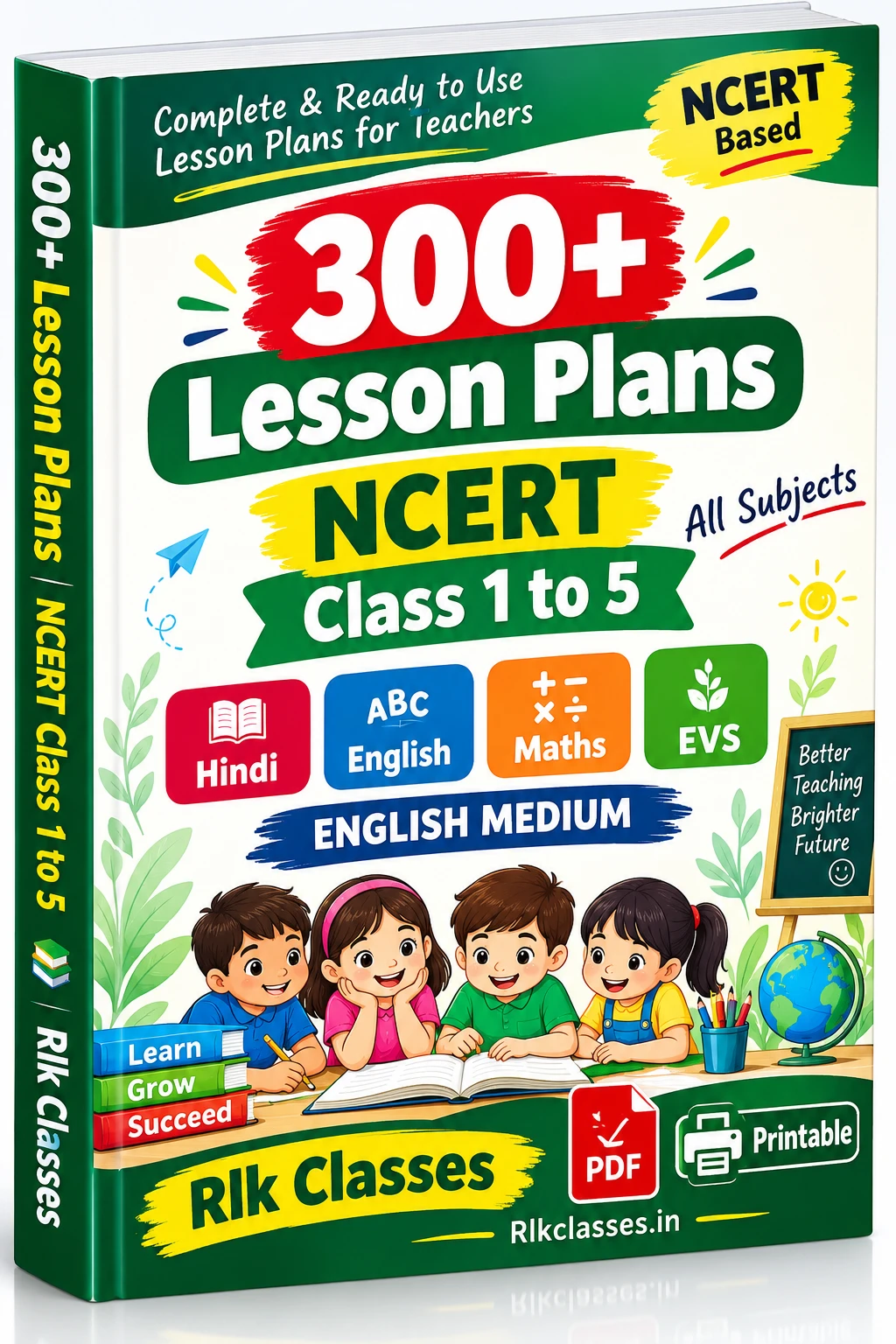
EVS Lesson Plan PDF Class 1 to 5 English Medium Primary classes के लिए तैयार किया गया useful lesson plan resource है। इसमें Class 1 से Class 5 तक के Environmental Studies यानी EVS के chapters और topics के लिए lesson planning material उपलब्ध कराया जा सकता है।
EVS Lesson Plan PDF material विशेष रूप से D.El.Ed, B.Ed, BSTC और Primary Teacher Training students के लिए उपयोगी है।
EVS Lesson Plan PDF Class 1 to 5
Primary level पर Environmental Studies विद्यार्थियों को उनके आसपास के environment, family, food, water, plants, animals, houses, travel, community और daily life से जोड़कर सीखने का अवसर देता है।
एक अच्छी EVS Lesson Plan PDF teacher को topic को step-by-step classroom में प्रस्तुत करने, विद्यार्थियों को activities में शामिल करने और learning outcomes को assess करने में सहायता करती है।
इसलिए Class 1 to 5 EVS Lesson Plan PDF D.El.Ed, B.Ed और BSTC students के लिए teaching practice तथा lesson preparation में काफी useful reference material हो सकता है।
Class 1 to 5 EVS Lesson Plan PDF Collection
Class 1 के primary EVS topics के लिए सरल और classroom-friendly lesson planning material।
Class 2 के EVS concepts को activities और learner participation के साथ पढ़ाने के लिए उपयोगी material।
Class 3 के EVS chapters और classroom teaching के लिए structured lesson plan reference।
Class 4 के Environmental Studies topics के लिए teaching practice में उपयोगी lesson planning material।
Class 5 के EVS concepts और primary classroom activities के लिए lesson plan collection।
Class 1 to 5 के EVS chapters और topics को एक complete collection के रूप में व्यवस्थित करने का option।
English Medium और Hindi Medium PDF
| PDF Collection | Classes | Medium | Use |
|---|---|---|---|
| EVS Lesson Plan Combo | Class 1–5 | English Medium | Teaching Practice |
| EVS Lesson Plan Combo | Class 1–5 | Hindi Medium | Teaching Practice |
| EVS All Classes Collection | Class 1–5 | English + Hindi | Reference & Preparation |
EVS Lesson Plan PDF देखने के लिए class 1 to 5 Sample
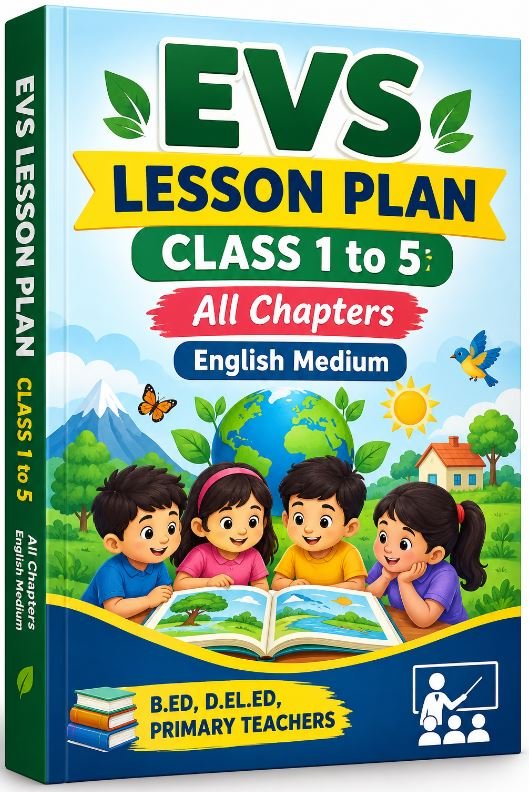
Evs lesson plan in english pdf
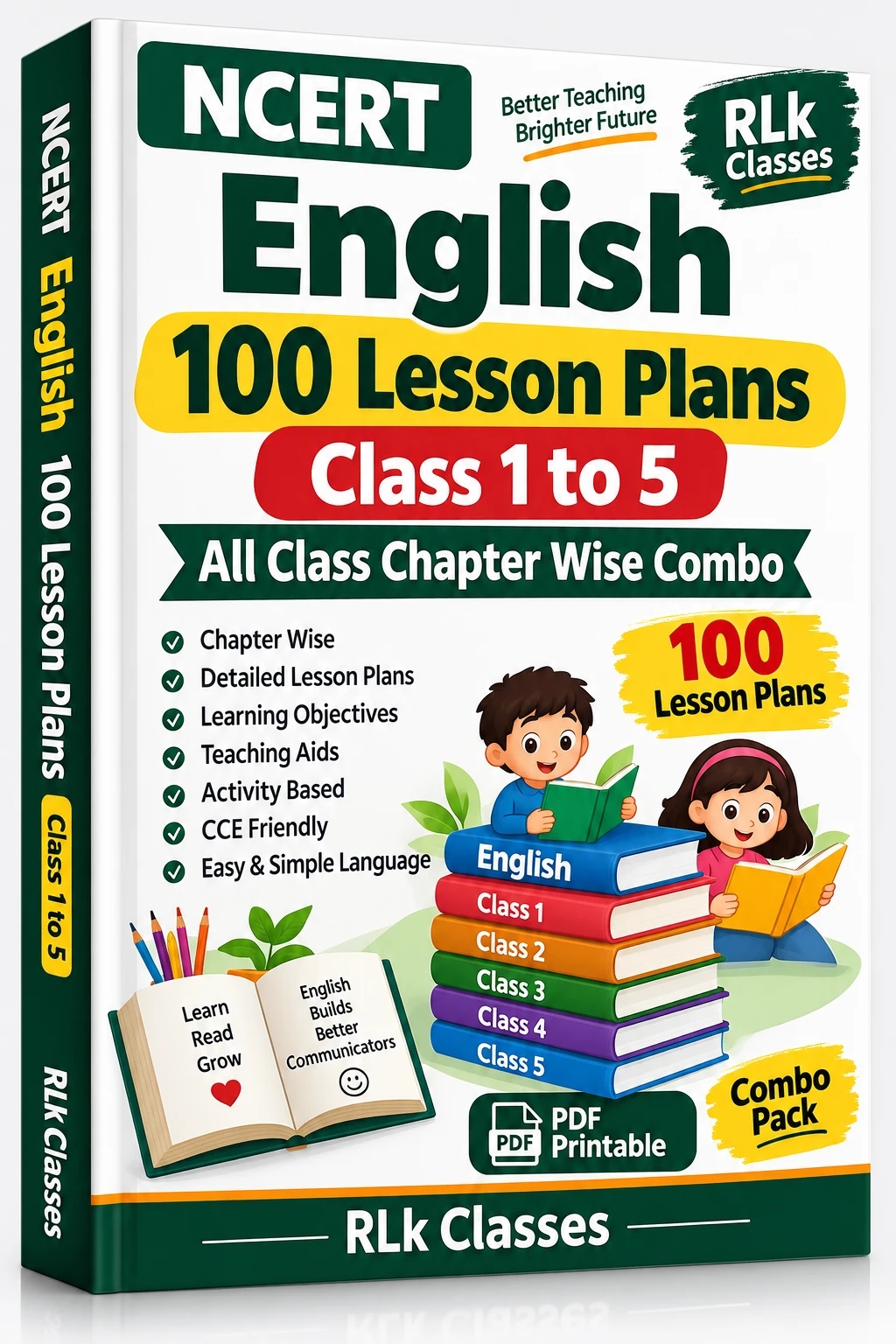
📘 Class 1–5 English Medium PDF Combo
NCERT EVS Lesson Plan PDF
Class 1 to 5 | English Medium | EVS Lesson Plan PDF
Chapter 1 EVS Lesson Plan PDF with Complete Teaching Content
RLK CLASSESPrimary Teacher TrainingB.Ed / D.El.Ed / BSTCDetailed lesson plans with learning objectives, teaching-learning activities, introduction questions, presentation tables, blackboard work, evaluation and homework.
Index / Lesson Plan Overview
| Class | Lesson / Chapter Topic | Duration | Core Learning Area |
|---|---|---|---|
| Class 1 | My Surroundings | 35–40 minutes | People, places and things around us |
| Class 2 | Living and Non-Living Things Around Us | 40 minutes | Observation and classification |
| Class 3 | Chapter 1: Family and Friends | 40 minutes | Family, relationships and cooperation |
| Class 4 | Chapter 1: Living Together | 40 minutes | Community, diversity and shared responsibility |
| Class 5 | Chapter 1: Water – The Essence of Life | 40 minutes | Importance, uses and conservation of water |
EVS Lesson Plan PDF 1 — Class 1
Environmental Awareness / Integrated Learning
My Surroundings
35–40 minutes
Observation, conversation and activity
General Objective: To develop awareness of the immediate environment and encourage children to observe their surroundings carefully.
Specific Learning Outcomes: By the end of the lesson, learners will be able to identify familiar places and objects, name people who help them, distinguish clean and dirty surroundings, and suggest simple ways to keep their classroom and home clean.
Teaching-Learning Materials: Picture cards of home, school, garden, road, trees, animals, classroom objects, dustbin and a clean/dirty surroundings picture.
Previous Knowledge: Children are familiar with their home, school, family members, classroom and nearby places.
Introduction / Previous Knowledge Testing
| No. | Teacher’s Question | Expected Student Response |
|---|---|---|
| 1 | Where do you live? | I live in a house. |
| 2 | Where do you study? | I study in a school. |
| 3 | What do you see on your way to school? | I see trees, houses, people and vehicles. |
| 4 | Who keeps our classroom clean? | We all help to keep it clean. |
| 5 | Where should we throw waste? | We should throw waste in a dustbin. |
Announcement of Topic: Today we will learn about “My Surroundings”.
Presentation / Teaching-Learning Process| Teaching Point | Pupil-Teacher Activity | Pupil Activity | Blackboard Summary |
|---|---|---|---|
| Meaning of surroundings | Explains that everything and everyone around us forms our surroundings. Shows a picture of a home and school. | Observe the picture and name familiar things. | Surroundings = People, places and things around us. |
| Places around us | Shows pictures of home, school, park, market and road. Asks learners to identify each place. | Name places and share which places they visit. | Home, school, park, market. |
| People who help us | Discusses teachers, doctors, farmers, cleaners and shopkeepers using picture cards. | Identify helpers and tell how they help us. | People help one another. |
| Clean surroundings | Compares pictures of clean and littered places. Explains the use of dustbins. | Point to the clean picture and suggest good habits. | Keep home and school clean. |
| Care for nature | Discusses trees, plants, birds and animals. Encourages children not to harm them. | Name a plant or animal they have seen. | Care for plants and animals. |
| Recapitulation | Asks learners to describe one thing they will do to improve their surroundings. | Give one simple promise. | Do not litter. Use a dustbin. |
Blackboard Work
Topic: My Surroundings1. Surroundings are the people, places and things around us.
2. Our surroundings include home, school, roads, plants and animals.
3. We should keep our surroundings clean.
4. We should care for plants and animals.
5. We should always use a dustbin.
| Type | Question | Expected Answer |
|---|---|---|
| MCQ | Where should we throw waste? (a) Road (b) Dustbin (c) Playground (d) Desk | (b) Dustbin |
| Fill in the blank | We should keep our surroundings ______. | Clean |
| One-word answer | Where do we study? | School |
| One-word answer | Name one person who helps us. | Teacher / Doctor / Farmer |
| Short answer | Write one way to keep your classroom clean. | Put waste in the dustbin. |
Homework: Draw your home or school and show any three things around it. Tell an adult one way to keep the surroundings clean.
Teacher’s Reflection: Check whether learners can name familiar places, identify helpful people and explain one clean habit. Give extra picture-based support to learners who need it.
EVS Lesson Plan PDF 2 — Class 2
Environmental Awareness / Integrated Learning
Living and Non-Living Things Around Us
40 minutes
Observation, discussion and classification
General Objective: To help learners observe and classify common objects and living things in their environment.
Specific Learning Outcomes: Learners will identify common plants and animals, distinguish living things from non-living things through simple features, sort picture cards into groups, and show care for living things.
Teaching-Learning Materials: Picture cards of a child, bird, tree, dog, stone, chair, ball, toy car and book; real classroom objects; board and chalk.
Previous Knowledge: Learners have seen plants, animals and common objects at home and school.
Introduction / Previous Knowledge Testing — 5 Questions| No. | Teacher’s Question | Expected Student Response |
|---|---|---|
| 1 | Name one animal you have seen. | Dog / Cat / Cow / Bird. |
| 2 | What do we get from plants? | Fruits, vegetables, shade and more. |
| 3 | Can a ball grow by itself? | No. |
| 4 | Does a plant need water? | Yes. |
| 5 | Name one thing in your classroom that is not alive. | Chair / Table / Book. |
Announcement of Topic: Today we will learn to observe and group living and non-living things.
Presentation / Teaching-Learning Process| Teaching Point | Pupil-Teacher Activity | Pupil Activity | Blackboard Summary |
|---|---|---|---|
| Observation | Shows a plant, a picture of a bird and a classroom chair. Invites children to describe what they see. | Observe and tell what each object is. | We learn by observing. |
| Living things | Explains that people, animals and plants are living things. Many grow, need resources and carry out life processes. | Name more examples of living things. | Examples: people, plants, animals. |
| Non-living things | Shows a stone, pencil, ball and table. Explains that these do not grow or carry out life processes by themselves. | Identify non-living things from the cards. | Examples: stone, ball, table. |
| Needs of living things | Discusses how plants need water, air, sunlight and suitable conditions; animals need food, water and air. | Match picture cards to basic needs. | Living things need suitable conditions to live. |
| Care and respect | Explains not to pull plants or hurt animals. Discusses watering plants and treating animals gently. | Suggest one way to care for a plant or animal. | Care for living things. |
| Classification | Places picture cards in two groups and asks learners to classify new examples. | Sort picture cards into two groups. | Living / Non-living |
Blackboard Work
Topic: Living and Non-Living ThingsLiving things: people, plants and animals.
Non-living things: stone, chair, ball and pencil.
Plants and animals need suitable conditions to live.
We should care for plants and animals.
| Type | Question | Expected Answer |
|---|---|---|
| MCQ | Which is a living thing? (a) Stone (b) Bird (c) Chair (d) Ball | (b) Bird |
| Fill in the blank | A plant needs water and ______ to grow. | Sunlight (accept air where appropriate to the discussion) |
| One-word answer | Name one non-living thing. | Chair / Stone / Ball |
| One-word answer | Name one living thing. | Plant / Bird / Child |
| Short answer | Write one way to care for plants. | Water them and do not damage them. |
Homework: Draw two living things and two non-living things. Label each drawing.
Teacher’s Reflection: Observe whether learners classify examples correctly. Use real objects and additional picture cards if learners confuse movement with being alive.
EVS Lesson Plan PDF 3 — Class 3
The World Around Us
Family and Friends
40 minutes
Discussion, storytelling and role-play
General Objective: To develop an understanding of family relationships, friendship, mutual care and cooperation.
Specific Learning Outcomes: Learners will describe different family relationships, understand that families may have different structures, identify qualities of a good friend, and suggest ways to share responsibilities at home and school.
Teaching-Learning Materials: Family and friendship picture cards, a sample family tree, story cards and board.
Previous Knowledge: Learners know family members and have experiences of playing and learning with friends.
Introduction / Previous Knowledge Testing — 5 Questions| No. | Teacher’s Question | Expected Student Response |
|---|---|---|
| 1 | Who are the people you care for at home? | My family members and caregivers. |
| 2 | Who is a friend? | A person we care for and enjoy spending time with. |
| 3 | How can you help someone at home? | By keeping things tidy or helping with simple tasks. |
| 4 | What should you do if a friend feels sad? | Listen, comfort them and offer help. |
| 5 | Do all families have exactly the same members? | No, families can be different. |
Announcement of Topic: Today we will study “Family and Friends.”
Presentation / Teaching-Learning Process| Teaching Point | Pupil-Teacher Activity | Pupil Activity | Blackboard Summary |
|---|---|---|---|
| Meaning of family | Explains that a family is a group of people connected through relationships, care and responsibility. Families may have different structures. | Share only what they feel comfortable sharing about family or caregivers. | Families care for one another. |
| Family relationships | Uses a simple sample family tree to explain relationships such as parent, child, grandparent and sibling. | Read the sample family tree and identify relationships. | Family relationships can be shown in a family tree. |
| Friends | Explains friendship through examples of playing fairly, listening and helping classmates. | Give examples of friendly behaviour. | Friends show kindness and respect. |
| Sharing responsibilities | Discusses age-appropriate tasks at home and cooperation during classroom activities. | Suggest one helpful task they can do safely. | We can share simple responsibilities. |
| Respecting differences | Explains that families may differ in size, members, languages, customs and daily routines. | Listen respectfully and identify one way people may be different. | Respect every family. |
| Cooperation | Organises a short role-play in which friends solve a problem by listening and taking turns. | Perform or discuss the role-play. | Listen, share and cooperate. |
Blackboard Work
Chapter 1: Family and Friends1. Families can be different in size and structure.
2. Family members care for and support one another.
3. Good friends listen, share and help.
4. We should respect differences.
5. Cooperation makes our classroom a better place.
| Type | Question | Expected Answer |
|---|---|---|
| MCQ | Which action shows friendship? (a) Pushing others (b) Sharing and taking turns (c) Laughing at someone (d) Refusing to listen | (b) Sharing and taking turns |
| Fill in the blank | We should ______ different families. | Respect |
| One-word answer | What diagram can show family relationships? | Family tree |
| One-word answer | Name one quality of a good friend. | Kindness / Honesty / Helpfulness |
| Short answer | Write two ways to be a good friend. | Listen carefully and help or share with others. |
Homework: Draw a simple family tree using a sample family or your own family if you wish. Write two sentences about how friends can help one another.
Teacher’s Reflection: Check understanding through discussion and role-play. Ensure that learners are not pressured to disclose private family circumstances.
EVS Lesson Plan PDF 4 — Class 4
The World Around Us
Living Together
40 minutes
Discussion, observation and group work
General Objective: To help learners understand how people live together in families and communities and why cooperation, respect and shared responsibility matter.
Specific Learning Outcomes: Learners will describe a community, identify people who provide community services, explain the importance of cooperation, recognise diversity in communities and propose actions that help people live together peacefully.
Teaching-Learning Materials: Pictures of a neighbourhood, school, market, park, community helpers, road signs and shared public spaces.
Previous Knowledge: Learners know their home, school, neighbourhood and some people who help the community.
Introduction / Previous Knowledge Testing — 5 Questions| No. | Teacher’s Question | Expected Student Response |
|---|---|---|
| 1 | What places can you find in a neighbourhood? | Homes, shops, school, park and other places. |
| 2 | Who helps keep public places clean? | Sanitation workers and people who use the places responsibly. |
| 3 | Why do people follow traffic rules? | To help everyone travel safely. |
| 4 | How can classmates work together? | By sharing tasks and listening to each other. |
| 5 | Do all people in a community have the same customs? | No, people may have different customs and traditions. |
Announcement of Topic: Today we will learn about “Living Together.”
Presentation / Teaching-Learning Process| Teaching Point | Pupil-Teacher Activity | Pupil Activity | Blackboard Summary |
|---|---|---|---|
| Meaning of community | Explains that a community includes people who live, learn, work or share spaces in an area. | Identify people and places in a neighbourhood picture. | A community includes people and shared places. |
| Community helpers | Discusses the work of teachers, health workers, farmers, drivers, shopkeepers and sanitation workers. | Match each helper with a service. | Community helpers support daily life. |
| Shared spaces | Shows a park, road, school and market. Discusses responsible use of shared spaces. | Suggest rules for keeping a shared place safe and clean. | Care for public places. |
| Cooperation | Gives a classroom example: learners work together to organise books or complete a group task. | Plan a simple group task and divide responsibilities. | Cooperation helps us solve problems. |
| Diversity and respect | Explains that people may speak different languages, follow different customs and have different abilities. | Give examples of respectful behaviour. | Respect differences and include everyone. |
| Shared responsibility | Asks how children can help maintain a safe, welcoming classroom and neighbourhood. | Suggest one achievable action. | Everyone can contribute. |
Blackboard Work
Chapter 1: Living Together1. A community is made up of people who share places and responsibilities.
2. Community helpers provide important services.
3. We must care for public places.
4. Cooperation helps people solve problems.
5. Respect diversity and include everyone.
| Type | Question | Expected Answer |
|---|---|---|
| MCQ | Which is responsible behaviour in a park? (a) Littering (b) Damaging plants (c) Using the dustbin (d) Breaking benches | (c) Using the dustbin |
| Fill in the blank | Working together is called ______. | Cooperation |
| One-word answer | Name one community helper. | Teacher / Doctor / Farmer / Sanitation worker |
| One-word answer | What should we show towards people’s differences? | Respect |
| Short answer | Write two ways to improve your neighbourhood. | Keep it clean and use shared spaces responsibly. |
Homework: Draw one shared place in your neighbourhood. Write three rules that help everyone use it safely and respectfully.
Teacher’s Reflection: Assess participation in group work and learners’ ability to connect cooperation and respect with everyday community life.
EVS Lesson Plan PDF 5 — Class 5
The World Around Us / EVS
Water – The Essence of Life
40 minutes
Discussion, demonstration and problem-solving
General Objective: To develop an understanding of the importance of water for living things and the need to use and conserve water responsibly.
Specific Learning Outcomes: Learners will explain why water is essential, identify daily uses of water, recognise common forms of water wastage, suggest practical conservation methods and understand that water must be kept clean and safe.
Teaching-Learning Materials: A transparent glass of clean water, pictures of rivers, rain, wells and taps, a water-use chart and board.
Previous Knowledge: Learners use water for drinking, cooking, bathing, washing and watering plants.
Introduction / Previous Knowledge Testing — 5 Questions| No. | Teacher’s Question | Expected Student Response |
|---|---|---|
| 1 | What do you drink when you feel thirsty? | Water. |
| 2 | Name two activities that need water. | Cooking and washing, for example. |
| 3 | Do plants need water? | Yes. |
| 4 | Where can we get water from? | Rain, rivers, lakes, wells and taps. |
| 5 | What should you do if a tap is left running? | Turn it off if safe, or tell a responsible adult. |
Announcement of Topic: Today we will study “Water – The Essence of Life.”
Presentation / Teaching-Learning Process| Teaching Point | Pupil-Teacher Activity | Pupil Activity | Blackboard Summary |
|---|---|---|---|
| Importance of water | Shows a glass of water and asks why people, animals and plants need water. Explains that water is essential for life. | Share examples of how living things use water. | Water is essential for life. |
| Uses of water | Discusses drinking, cooking, cleaning, farming and industrial uses with pictures. | List daily uses of water. | Uses: drinking, cooking, cleaning and farming. |
| Sources of water | Shows pictures of rain, rivers, lakes, ponds and groundwater. Explains that tap water comes through a supply system. | Identify different sources in the pictures. | Sources include rain, rivers, lakes and groundwater. |
| Water cleanliness | Explains that water can contain harmful germs or substances even when it looks clear. Discusses safe drinking-water practices. | Suggest ways to keep water containers clean. | Keep drinking water covered and use safe water. |
| Water wastage | Discusses running taps, leaking pipes and unnecessary water use. | Identify wastage in example pictures. | Close taps and report leaks. |
| Water conservation | Introduces practical measures such as using only the water needed, repairing leaks and collecting rainwater where suitable. | Choose one conservation habit to practise. | Save water; use it wisely. |
Blackboard Work
Chapter 1: Water – The Essence of Life1. Water is essential for people, plants and animals.
2. We use water for drinking, cooking, cleaning and farming.
3. Water comes from rain, rivers, lakes and groundwater.
4. Drinking water should be safe and stored hygienically.
5. Close taps, report leaks and avoid wasting water.
| Type | Question | Expected Answer |
|---|---|---|
| MCQ | Which action saves water? (a) Leaving a tap open (b) Repairing a leak (c) Washing the road with a hose unnecessarily (d) Ignoring a dripping tap | (b) Repairing a leak |
| Fill in the blank | Water is essential for ______. | Life |
| One-word answer | Name one natural source of water. | River / Lake / Rain |
| One-word answer | What should we close after using water from a tap? | Tap |
| Short answer | Write two ways to conserve water. | Close taps after use and repair/report leaks. |
Homework: Observe how water is used at home. Write five uses of water and three ways your family can avoid wasting it.
Teacher’s Reflection: Check whether learners can explain the importance of water and suggest realistic conservation habits. Reinforce that clear-looking water is not always safe to drink.
General Teaching Strategies
Use pictures, oral responses, pair work and real-life examples. Allow learners to answer by speaking, drawing or writing.
Use sorting cards, role-play, observation tasks, group discussion and simple classroom demonstrations.
Observe participation, listen to answers, review drawings and use the five evaluation questions in each lesson.
Cleanliness, care for nature, kindness, cooperation, respect for diversity and responsible use of resources.
Teacher’s Record
| Record Item | Details to Fill |
|---|---|
| Name of School | ________________________________________ |
| Name of Student-Teacher | ________________________________________ |
| Class / Section | ________________________________________ |
| Date of Teaching | ________________________________________ |
| Teaching Practice Supervisor | ________________________________________ |
| Supervisor’s Remarks | ________________________________________ |
EVS Lesson Plan में क्या-क्या उपयोगी है?
Lesson के learning objectives को स्पष्ट रूप से निर्धारित करने में सहायता।
Teacher द्वारा classroom में topic को प्रस्तुत करने की planning।
Students को discussion, observation और activities में शामिल करने के लिए उपयोगी structure।
आसपास के environment और daily life से जुड़े learning activities के लिए ideas।
विद्यार्थियों की learning को check करने के लिए assessment planning।
Classroom teaching में उपयोग होने वाली teaching-learning resources को व्यवस्थित करने में सहायता।
EVS Lesson Plan PDF किसके लिए उपयोगी है?
EVS Lesson Plan PDF Class 1 to 5 English Medium मुख्य रूप से teacher education और primary classroom teaching से जुड़े learners के लिए उपयोगी है।
D.El.Ed lesson planning और teaching practice के लिए।
B.Ed practical work और school internship में reference के लिए।
BSTC / Pre D.El.Ed teaching practice और lesson preparation के लिए।
Primary classes में EVS teaching की तैयारी के लिए।
Teaching practice के दौरान lesson preparation को व्यवस्थित करने में सहायता।
Teacher training students के लिए useful reference material।
RLK Classes के Related Lesson Plan Resources
अलग-अलग classes और subjects के Lesson Plan PDF collections देखें।
View PDF StoreB.Ed और teacher training से संबंधित lesson plan resources।
View B.Ed PlansMicro Teaching lesson plans और teaching practice resources।
View Micro TeachingEducational preparation के लिए RLK Classes के online tests देखें।
Take Online TestEVS Lesson Plan PDF Class 1 to 5
English Medium और Hindi Medium में Class 1 to 5 EVS Lesson Plan PDF Combo प्राप्त करें।
Frequently Asked Questions
यह Class 1 से Class 5 तक के primary-level EVS lesson plans के लिए है।
हाँ, English Medium Class 1 to 5 EVS Lesson Plan PDF collection उपलब्ध कराया जा सकता है।
हाँ, इस page पर English Medium और Hindi Medium दोनों PDF Combo के buttons दिए जा सकते हैं।
हाँ, EVS lesson planning और teaching practice के लिए D.El.Ed students इसका उपयोग reference material के रूप में कर सकते हैं।
हाँ, collection का focus Class 1, Class 2, Class 3, Class 4 और Class 5 पर है।
यह RLK Classes द्वारा तैयार किया गया independent educational study material है। यह किसी government department, university या examination board की official publication नहीं है। विद्यार्थियों और शिक्षकों को अपने institution द्वारा निर्धारित syllabus तथा latest instructions को प्राथमिकता देनी चाहिए।
यदि आप EVS Lesson Plan PDF Class 1 to 5 English Medium, EVS Lesson Plan PDF Download, Primary EVS Lesson Plan PDF या Class 1 to 5 All Chapters EVS Lesson Plan खोज रहे हैं, तो यह resource teacher training और teaching practice के लिए एक उपयोगी reference हो सकता है।